I am at SIIM 2013 until Sun. I am looking forward to learning some great new things and meeting some new awesome people, as I always do. I will try to tweet and/or post about some hot topics when I can.
Look for #SIIM13 on Twitter for info.
I am at SIIM 2013 until Sun. I am looking forward to learning some great new things and meeting some new awesome people, as I always do. I will try to tweet and/or post about some hot topics when I can.
Look for #SIIM13 on Twitter for info.
Prezi presention from @azbib (Heart and Stroke foundation) from today’s Apps for Health event.
Product developers, have a read: 10 great, practical tips on approaching app development that applies to mobile and traditional application products.
Also, some key trends in health for 2013 (originally from Forbes).
I had heard good things about this one-day conference, so I decided to take the drive down to Hamilton, ON to check it out. I am glad I did.
Apps for Health has 3 tracks. One focused on Technology, one on Health, and another on Education. They also had keynote speakers to open and close the day of sessions.
To be honest, I was fearing that the recurring trend was going to go something like this: “Healthcare is broken! I love the App Store! Why can’t we get more apps faster!?!” …but the speakers were polished and came with insight and data.
Topics ranged from the needs for a “prescription” for a set of apps for different patient conditions, different levels of safety and risk that apps represent (for physicians and patients), regulatory challenges, privacy, security, and development approaches.
A collection of small and not-so-small vendors had table top displays set up, and attendees (and students) seemed to be routinely interacting with the vendor staff.
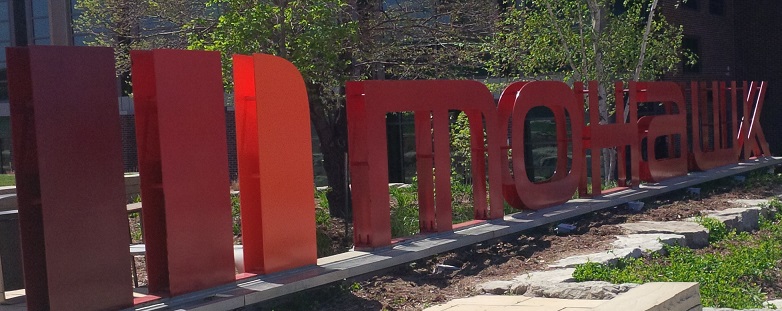
Having never been to Mohawk college before, I have to admit that I was quite impressed with the facilities. The buildings are very modern. Everywhere you look, you see technology—on the walls, in the classrooms, in the library, in the hands of the students …everywhere.
One of the more enjoyable parts of my excursion to The Hammer (nickname for Hamilton), was a tour of the Mohawk MEDIC lab. The students demonstrated a complete workflow of a patient’s journey through a referral from her family doctor, to an exam with a specialist (an allergist), and an unfortunate skiing accident in a remote area.
They showed how an EMR—in this case, the open source OSCAR EMR—could accept the referral and share it with the specialist by using an IHE XDS infrastructure. They then showed how the specialist could perform the exam and share the results back to the EMR using the same methods. They also showed the use of mobile technology by EMT and ER staff to review the patient’s records before administering treatment, thus avoiding a potential adverse incident (the allergist report found her allergic to penicillin and other drugs).
Mohawk is serving its students well. They are not only learning about the real world challenges facing healthcare, they are learning about how to build and apply open solutions, and use the latest tools to do it. And they are doing it in a fantastic facility. If you know someone thinking of going there, at least go for the tour—you won’t regret it.
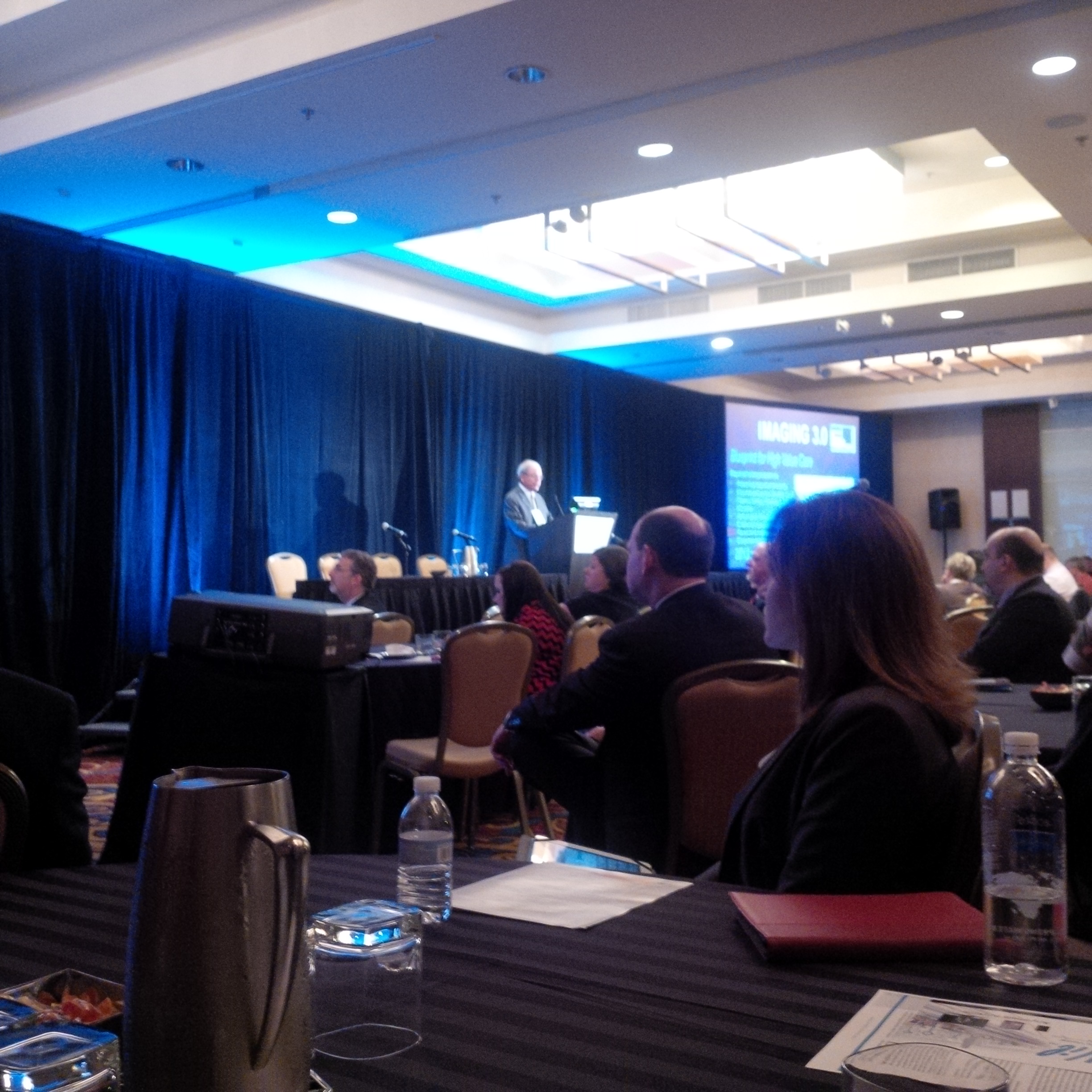
In reading some of the comments from Lynn Britton, president and CEO of Chesterfield, Mo.-based Mercy at the ATA’s (American Telemedicine Association) 18th Annual International Meeting & Trade Show from this article, it reminded me of some comments I made in this post.
The quote from the article that stood out to me…
“If we had thought about the classic return on investment around the infrastructure we built, we would have had second thoughts about it,” he said. “But the return is there, because that infrastructure is robust and sound, because we can provide those services in every one of those communities you saw on that map.”
Message to providers: expand your network, expand your services, lower your costs …or fall behind.
Here is another article titled “3 things that will help telemedicine go mainstream and win over pessimists” based on ideas shared at the ATA’s annual meeting.
And here is an article titled “3 ways telemedicine is helping Wyoming”, which describes how telemedicine is providing valuable services to the people of the 2nd least densely populated state (only Alaska has fewer people per square mile).
This article is about a VC (Venture Capital) fair at the ATA meeting.
Though it is in context of telemedicine and mHealth, the points and comments are generally applicable to any start-up.
An article worth reading (if you didn’t already by going on LinkedIn).
I would like to think I am equal parts Thinker and Builder, with a little bit of Improver (when it is called for). I get bored being only a Producer.
A friend shared this with me. What a great video. If you have 4.5 minutes, check this out.
Read this, seriously.
Some thoughts…
Worth a read (note: you may have to have an account on the site, but I believe it is free). Covers a lot of history and provides a sobering perspective of state of Radiology today…
Economically, radiology experienced a classic bubble in my 30 years as a department chairman. Tailwinds from new technology increased both the demand for imaging services and reimbursement per average case. These were coupled with increased efficiency from PACS, and led to remarkable increases in departmental income and compensation for individual radiologists.
While the economic vectors were all pointing up, we were lulled into thinking this was the way things were always going to be — and should be. Wrong. As soon as imaging became the fastest-growing cost segment in healthcare, the knives came out and reimbursement cuts began, however flawed their logic. The bubble burst.
via Healthcare IT News.
Patterns…