
More from Apps for Health 2013

As I mentioned last week, there was some valuable info shared at the Apps for Health event at Mohawk college in Hamilton.

The keynote speaker, William Falk (@willfalk), shared some valuable statistics, along with a proposal for how to envision different types of apps, using a pharmacy dispensing different types of drugs, as a metaphor.

He has also shared his slides, which are well worth a look. Enjoy.

Apps for Health – Tips for Building an App, Key Trends in Health IT

Prezi presention from @azbib (Heart and Stroke foundation) from today’s Apps for Health event.

Product developers, have a read: 10 great, practical tips on approaching app development that applies to mobile and traditional application products.

Also, some key trends in health for 2013 (originally from Forbes).

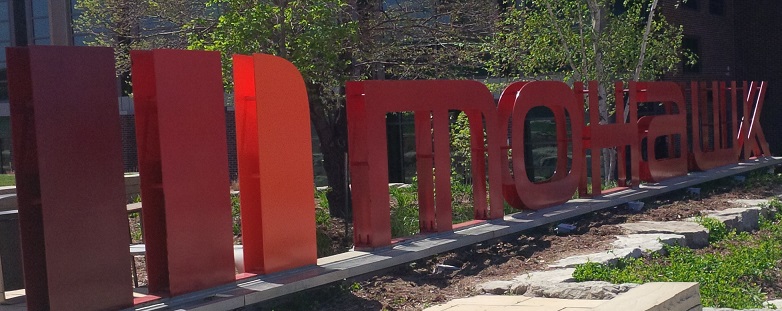
Apps for Health 2013 at Mohawk College

Mohawk1

I had heard good things about this one-day conference, so I decided to take the drive down to Hamilton, ON to check it out. I am glad I did.

Apps for Health has 3 tracks. One focused on Technology, one on Health, and another on Education. They also had keynote speakers to open and close the day of sessions.

To be honest, I was fearing that the recurring trend was going to go something like this: “Healthcare is broken! I love the App Store! Why can’t we get more apps faster!?!” …but the speakers were polished and came with insight and data.

Topics ranged from the needs for a “prescription” for a set of apps for different patient conditions, different levels of safety and risk that apps represent (for physicians and patients), regulatory challenges, privacy, security, and development approaches.

A collection of small and not-so-small vendors had table top displays set up, and attendees (and students) seemed to be routinely interacting with the vendor staff.

Having never been to Mohawk college before, I have to admit that I was quite impressed with the facilities. The buildings are very modern. Everywhere you look, you see technology—on the walls, in the classrooms, in the library, in the hands of the students …everywhere.

One of the more enjoyable parts of my excursion to The Hammer (nickname for Hamilton), was a tour of the Mohawk MEDIC lab. The students demonstrated a complete workflow of a patient’s journey through a referral from her family doctor, to an exam with a specialist (an allergist), and an unfortunate skiing accident in a remote area.

They showed how an EMR—in this case, the open source OSCAR EMR—could accept the referral and share it with the specialist by using an IHE XDS infrastructure. They then showed how the specialist could perform the exam and share the results back to the EMR using the same methods. They also showed the use of mobile technology by EMT and ER staff to review the patient’s records before administering treatment, thus avoiding a potential adverse incident (the allergist report found her allergic to penicillin and other drugs).

Mohawk is serving its students well. They are not only learning about the real world challenges facing healthcare, they are learning about how to build and apply open solutions, and use the latest tools to do it. And they are doing it in a fantastic facility. If you know someone thinking of going there, at least go for the tour—you won’t regret it.
Infographic – Healthcare Providers and Health Information Technology

A picture is worth a 1,000 words …or about US$19 billion, in this case.

Check out this USA Today-style (or theonion.com, if you prefer) infographic from the ONC.

Here is some fun with numbers….

A couple of months ago, I posted on a survey on doctors’ satisfaction with their EHR. An excerpt from the article about the survey…

“In 2012, about one-third were “very dissatisfied” with the ability of their EHR to decrease workloads, up from only one-fifth in 2010, according to the survey. Gripes were seen elsewhere, too. Thirty-two percent were dissatisfied with EHR features and functionality in 2012, compared with 20 percent in 2010, while 37 percent in 2012 were not pleased with their product’s ease of use, up from 23 percent in 2010.”

In the infographic, the ONC claims that “85% of physicians who have adopted an EHR system reported SATISFACTION with their system” (47% “somewhat”, and 38% “very” satisfied).

So, somewhere between 15% (ONC’s numbers) and about 33% (survey’s findings) is about right, I guess.

The survey and the ONC did agree on one area…

  • ONC: “8 in 10 of physicians reported that EHR use enhanced overall patient care”
  • Survey: “One-fifth were also highly displeased with the technology’s ability to improve patient care last year, compared with one-tenth in 2010″

Don’t get me wrong: I believe in the value of an EHR. I just bet that those using them 10 years from now wish that they could send us a message about what ended up really mattering.

Review of Stage 2 Meaningful Use Test Procedure for Image Results …and other MU tests

I was just checking out the draft test procedure (PDF) for access of image results under Meaningful Use stage 2, §170.314 (a)(12).

This is the test that vendors seeking certification of their EHR products must complete and provide evidence of passing.

Often, EHR vendors get imaging wrong, but I think the authors of the test procedure got it mostly right. At least in terms of the requirements.

Essentially, the EHR must allow an authenticated and authorized user to be able to discover that exam images for a patient are available, and access the images (and associated “narrative”) in the EHR, or integrated systems, without requiring the user to re-authenticate, or search for the patient or exam.

Said another way, the system must have some form of Single Sign On (SSO) with the imaging system (or subsystem, if part of the EHR), and share the existing patient and exam context from the EHR to the imaging system.

A couple of comments…

  • I have seen SSO done well and poorly (read as: insecurely) between EHRs and imaging systems. When done poorly, it if often due to technical limitations in the EHR and/or imaging systems. Or, it is simply because the integration and/or IT staff lack the knowledge or effort to do it right (read as: securely). I have found that HIE and portal vendors and enterprise viewers are generally better equipped to properly handle SSO than EHR and PACS products (probably because they are generally based on newer technology and are often deployed in multi-facility environments that demand interoperability).
  • Integration from the EHR to a patient folder or specific exam has been around since PACS was first launched from an EHR well over a decade ago. What often gets lost is that users often want to compare exams side-by-side (e.g. pre-op and post-op). So, the imaging system may need to expand the context beyond a specific exam to allow this. As long as EHRs keep behaving like filing cabinets, the imaging viewer vendors will have to solve this.
  • The typical method of having an EHR be aware that an exam’s images are available for viewing is to push a modified HL7 ORU message, containing info about the exam, from the image manager to the EHR. The EHR then normally parses the info and uses it, along with a URL (or similar) string template, to create a context-sensitive link that can launch the viewer and present the desired exam. Some EHR can provide multiple exam identifiers, when the imaging viewer supports it, to show more than one exam in a single view. More modern methods for an EHR to discover the availability of an exam’s images is to use a REST-based query method, much like defined in DICOM‘s QIDO-RS (Query based on ID for DICOM Objects by RESTful Services) standard (in development).
  • An additional note on the URL to launch the viewer in context mentioned above: check out IHE’s work on the new integration profile Invoke Image Display (IID).

Some other test procedures that could be related to imaging…

  • Here (PDF) is the test procedure on authentication, access control, and authorization. And here is one on automatic log-off. I would have liked to see some requirements for SSO, like Kerberos or OAuth.
  • This test procedure on integrity requires a hash to be calculated and validated. This may (should) also be required for image exchange.
  • For the requirement for emergency access, if the imaging system does not allow the EHR to securely manage this (this can be done, by the way), the imaging system may have to also provide an emergency access override function (which means that the unique identity of the user had better have been passed securely to the imaging system, or it will have no idea to whom it is granting access).

Blog – Hospital versus clinic EMRs: what’s the difference?

Technology is easy these days—it really is. Knowing how to use it to solve a problem is harder. And truly understanding the problem is often the difference between success and failure.

I have always felt that one needs to understand the motivations, habits, and even fears of the user, as well as the environment where the product will be used, before design can start.

In this commentary, the author compares the differences between the hospital and clinic environment, and the people working there. I found it insightful, well-written and I learned some new things—check it out.

Article – DoD yanked from health records project

This article is intriguing (and a bit depressing).

First, because it shows once again that the amount of money (say like, US$1 billion) that you throw at a problem does not assure success. Aligning goals and system design principles—and getting firm commitment from all stakeholders—is critical, and it doesn’t seem like that happened here.

Also, there is no mention of the use of commercial HIE technology for record exchange. The article mentions the exploration of commercial EMR technology vs. a custom (“home grown”) EMR, like the VA’s VistA. How is the ONC—a government agency—promoting the use of HIE solutions as part of their patient record evolution, but the VA and DoD not looking at the same approach?

Finally, the vision of an open system is not flawed. And by open, I mean interoperable with modern Web-based APIs. It could even mean open source.

Article – Can a smartphone do what your doctor does?

This article provides a summary of medical devices and apps that connect to your smartphone and collect physical examination information. The author is a doctor and provides a good explanation of the utility and necessity of the different tests.

The devices assessed by the article’s author include…

  • Blood Pressure Monitor by Withings and Blood Oxygen Monitor by iSp02
  • ECG Cellphone Case by AliveCor
  • iExaminer by Welch Allyn
  • SpiroSmart

From her assessment, it seems that the medical tricorder is slowly becoming a reality. I do agree that having a separate app to view the results from each device is a PITA, but this should not last long. With Bluetooth and WiFi connected devices wireless tethered to the smartphone, and new data formats and protocols popularized in HTML5, the shift to storing the collected information into the EMR or HIE will be soon.

Thoughts on Telemedicine

In reading some of the comments from Lynn Britton, president and CEO of Chesterfield, Mo.-based Mercy at the ATA’s (American Telemedicine Association) 18th Annual International Meeting & Trade Show from this article, it reminded me of some comments I made in this post.

The quote from the article that stood out to me…

“If we had thought about the classic return on investment around the infrastructure we built, we would have had second thoughts about it,” he said. “But the return is there, because that infrastructure is robust and sound, because we can provide those services in every one of those communities you saw on that map.”

Message to providers: expand your network, expand your services, lower your costs …or fall behind.

Here is another article titled “3 things that will help telemedicine go mainstream and win over pessimists” based on ideas shared at the ATA’s annual meeting.

And here is an article titled “3 ways telemedicine is helping Wyoming”, which describes how telemedicine is providing valuable services to the people of the 2nd least densely populated state (only Alaska has fewer people per square mile).

Article – Radiology Staffing: How to Do More with Less

A lot of people are talking about using analytics to make operational improvements (read as: lowering costs while improving quality of service), but this article describes some specific ways to do this within a Radiology practice.

Examples (from the article)…

  • Use actual procedure data to determine the specialty needed, as well as the number of staff needed in each facility/location. It also helps determine if full-time or part-time staff are needed.
  • Adapt the daily shift schedule based on hourly exam volume peaks.

The article also explains how technology is used to improve efficiency…

  • Cloud based image sharing, integrated with PACS, to distribute reading of exams among distributed Radiologists.
  • Shared worklist across facilities